
Why I Wrote George and Adel Without Labels
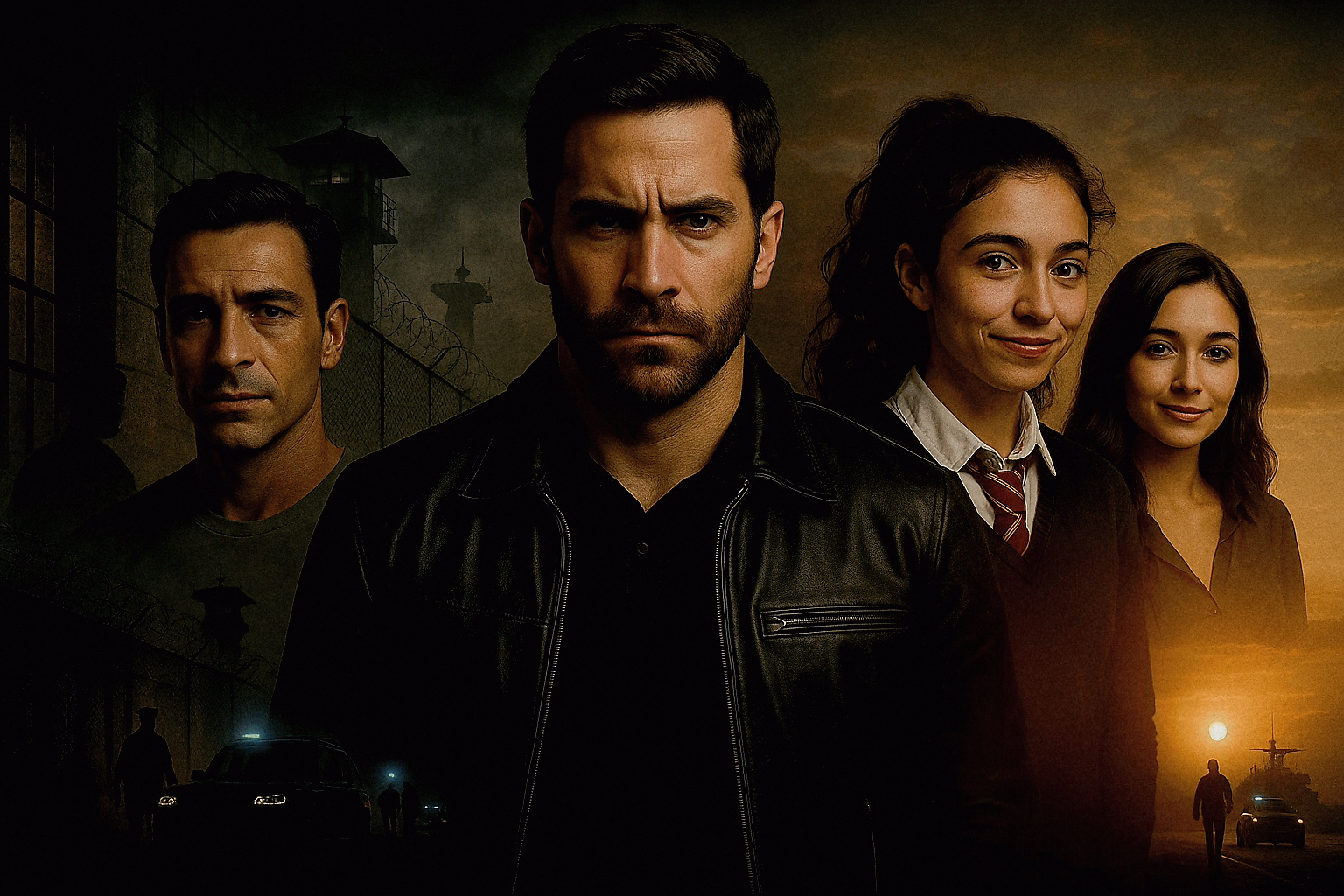
From the very beginning, I knew George was autistic. I'm diagnosed AuDHD myself, and I wanted that representation on the page with intent, not accident, not implication. George was always going to be written through an autistic lens, because I understand that internal terrain. I understand the constant calculation, the pattern hunger, the fatigue of noise, the cost of misinterpretation, the way a mind can be both brutally precise and emotionally overwhelmed at the same time.
What I didn't know from the start was whether I would name it in the story.
Because a label and a diagnosis fixes very little, at the moment, and I want to change that. The support people receive post-diagnosis is often unacceptably underwhelming. Too many people finally get an answer and then are left holding a piece of paper and not much else.
But I also don’t believe a label is a bad thing.
For me, diagnosis was an eye-opening moment. It didn’t suddenly make life easy, but it did reduce the self-loathing. It gave me a clearer understanding of why I’m different, and it gave me a base to start learning. It also gave me community. I stopped feeling as alone. That matters.
Understanding is what changes things, not the label itself.
And a lot of people don’t even get the choice. Schools miss it. Health services miss it. Families miss it. People grow up undiagnosed, not because they chose that path, but because the systems that should recognise and support them failed. Their lives genuinely would have been better with understanding, support, and the chance to build the right coping tools earlier.
That’s the reality I wanted to reflect. George and Adel are written to represent you.
George is autistic. Adel lives with ADHD. They are undiagnosed in the story because the vast majority of neurodivergent people are undiagnosed, or diagnosed late, and left to fend for themselves. They struggle through life without language for what’s happening, without the support that should exist, and without the simple relief of knowing there’s a reason they find the world harder than other people seem to.
George notices patterns other people miss. He hears tone before words. He struggles with noise, chaos, and sudden emotional shifts, but thrives in structure, logic, and precision. He feels deeply, even when he does not show it well. He copes by compartmentalising, by building systems in his head that keep the world manageable.
The same is true of Adel.
Adel is quick, restless, impulsive, fiercely curious. Her thoughts move faster than her mouth, except when they do not, and then everything comes out at once. She absorbs information constantly, emotionally and intellectually. She reacts before she reflects, but she also adapts, learns, and grows at speed when she is given space to do so.
I did not write either of them to tick a box. I wrote them as people first, and then I honoured the way their minds move through the world.
So why keep it unlabelled on the page?
Because I wanted to write them in a way that reflects how many people actually live. Not everyone has the language. Not everyone has the support. Not everyone even knows what to ask for. And when you’re undiagnosed, you’re often forced to build your own coping strategies in the dark, while everyone around you assumes you’re just difficult, lazy, rude, too intense, too sensitive, or not trying hard enough.
By leaving the labels off the page, I could show how George and Adel think and feel under pressure, in love, in fear, and in the quiet moments, without turning them into case studies.
It also allows the reader to recognise themselves, or someone they love, without being told who they are supposed to be seeing.
Some readers will recognise George immediately. Others will not have the language for it, but they will feel it. The same goes for Adel. That recognition matters more to me than a diagnosis dropped into dialogue.
If you see yourself in them, that's not an accident.
And if you don't, I hope you still come away understanding them a little better.
That, ultimately, is the point.
