
In Conversation with George, Adel and Natalia
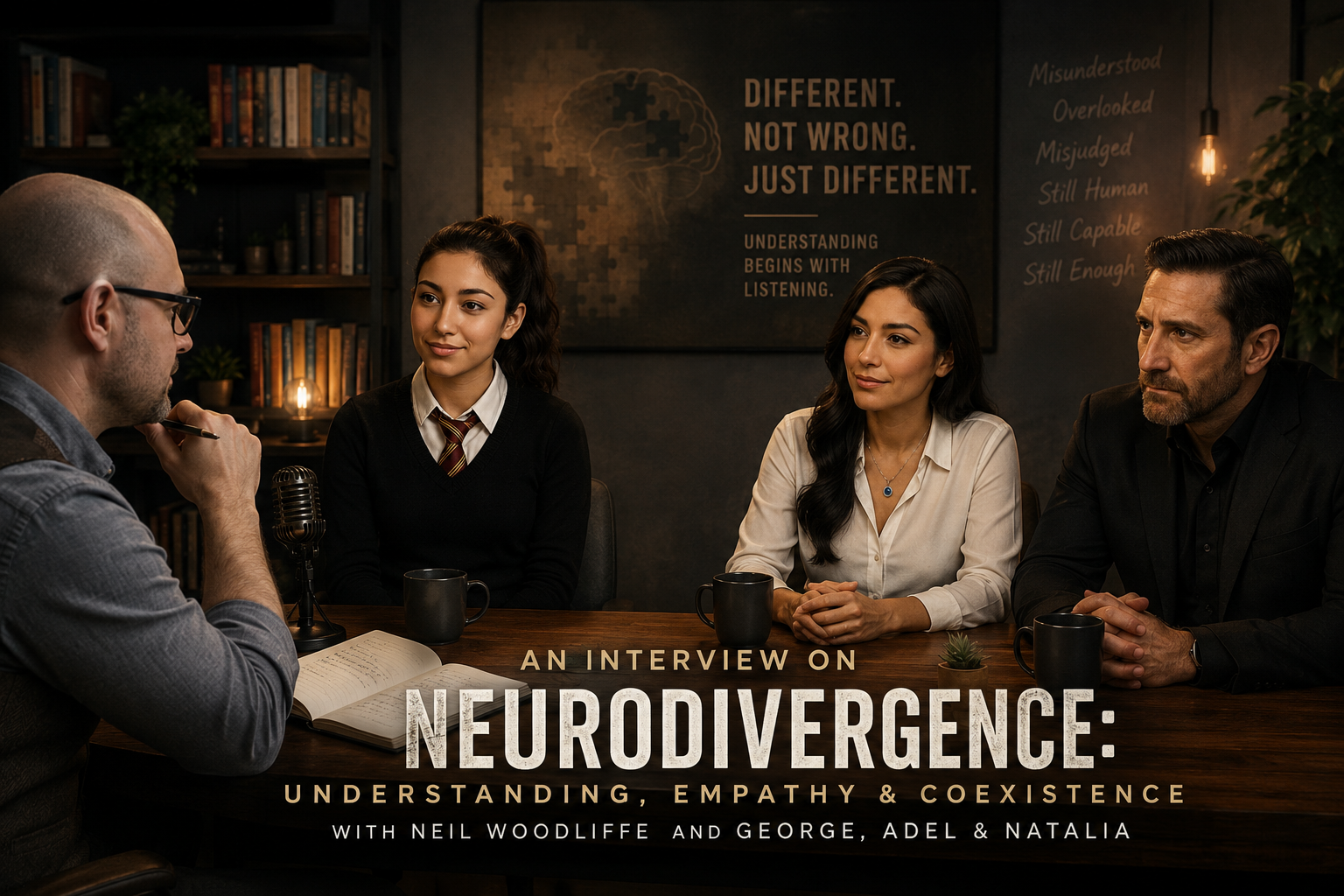
Writing Undiagnosed Neurodivergence in Inheritance of Shadows
What happens when you are different before you have the language to explain why, and judged against a version of normal that was never built for you?
For a long time, I didn’t have the words, I just knew I struggled in ways other people didn’t. I was exhausted by things others brushed off, had to work harder to stay employed, to keep friendships going, to avoid conflict, to look normal enough to be accepted.
When there’s no diagnosis, there’s no shared language, only the growing suspicion that the problem must be you.
That is why George and Adel matter to me. They carry emotional truths many people will recognise. The strain of being misunderstood. The cost of high masking. The shame that builds when overwhelm is labelled as attitude, burnout is labelled as laziness, and emotional dysregulation is labelled as hostility.
This is not about writing perfect representation, It’s about writing people. Difficult, funny, guarded, loving, frustrating, loyal, wounded people. People who are capable, but not always coping.
So rather than explain all of this as the author, I wanted to sit down, at least imaginatively, with George, Adel and Natalia, and let them answer for themselves.
Neil: George, did you know you were different, or did you only know that the world kept reacting to you differently?
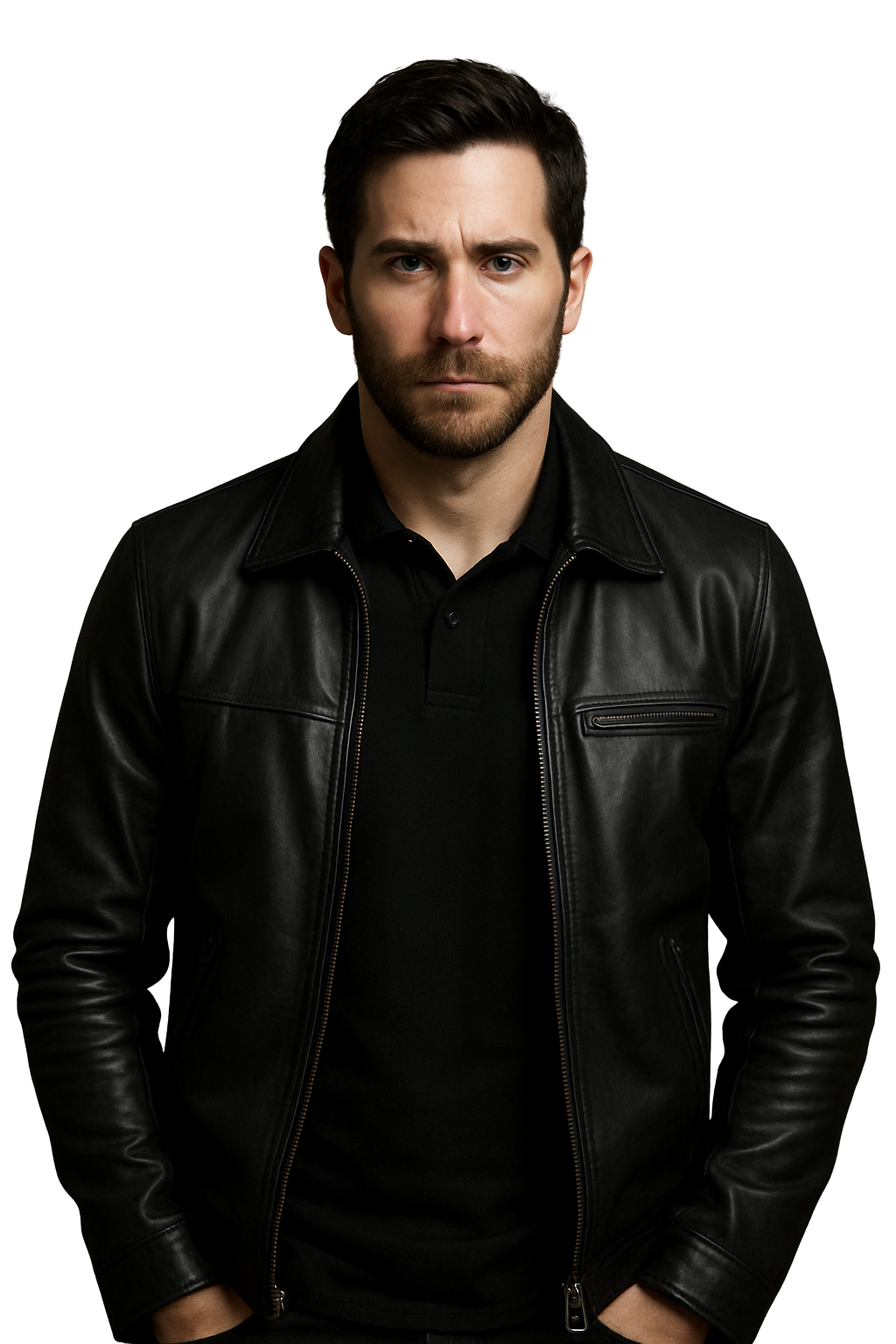
George: I didn’t have a word for it and that’s the honest answer.
I didn’t sit there thinking I was different in some explainable way, I just knew things went wrong around me that didn’t seem to go wrong for other people.
I’d say something plainly and someone would take offence, or I’d answer a question directly and people would say I had an attitude. I’d try to correct something because it was wrong, and suddenly the issue wasn’t the thing that was wrong anymore. It was me. My tone. My face. The way I’d said it.
That happens a lot.
To me, the baseline is simple. Say what you mean., mean what you say. Be clear.
But most people seem to be working from another baseline entirely. One with hidden meanings, implied rules, emotional signals, and expectations no one had explained but everyone acted as though I should already know.
That was the part I struggled with.
And when two people are using different rules, neither wrong, but only one set of rules is treated as normal, the person using the other set gets blamed.

Natalia: That is what people miss.
George, Adel, and people like them aren’t wrong. They’re working from a different baseline, that’s all. It’s a different way of reading the world, processing, understanding, and responding.
Most people just assume their way of communicating is normal.
But normal is a dangerous word sometimes. It often just means common, or familiar, or the way the loudest group agreed things should be done.
There are more than eight billion people in the world, and around fifteen to twenty per cent of them are thought to be neurodivergent. That’s well over a billion people whose brains may process communication, emotion, focus, noise, pressure, and social cues differently.
Their way of communicating is valid too.
But why is it always them who have to adapt?
George can try to be clearer. Adel can try to slow down. I know that. I ask that of them too.
But the people around them can meet them halfway.
Say what you mean. Be clearer. Pause before judging. Don’t punish someone just because their reaction doesn’t match what you expected.
It shouldn’t always be the neurodivergent person making all the effort.

Adel: That’s the bit that annoys me. Why’s it always me who has to change?
I get told to calm down, slow down, lower my voice, stop interrupting, stop being too much.
And yeah, fine, sometimes I do need to rein it in, I know that. Mum gives me the look and suddenly I remember society has their terms and conditions.
But sometimes, why can’t I just be accepted as I am?
This is my default setting. Fast thoughts, big emotions, and too many words.
I can try to slow down.
I do try.
But why does normal always mean someone else’s version of it?
Why can’t I be me and still be loved, still be included, still be taken seriously?
I’m not choosing the difficult setting because I enjoy the drama.
This is just how I arrive in the world.
Neil: So when things do go wrong, what are people usually misunderstanding?
George: Intent. That’s usually the problem.
If I go quiet, they think I am sulking, judging them, or refusing to engage.
Most of the time, I’m just trying not to make things worse. I’m holding back because experience taught me once I’m under pressure, I can become too blunt, too exact, too focused on the point and not enough on how the point lands.
So I try to edit myself. I watch my face, I try to measure my tone. I choose the safer sentence, not always the truer one.
I learnt to do that because it kept things calmer, but it doesn’t fix the problem. It just makes it less visible. The pressure’s still there. I’m still tracking the words, the room, the faces, the possible meanings, the things I’m allowed to say and the things I have to swallow.
That takes effort. More effort than people see.
And because so much of my attention is on not getting it wrong by their rules, I have less left for the conversation itself.
So sometimes I pause too long. Sometimes I go quiet. Sometimes the safer sentence sounds flat. Sometimes my face doesn’t match what they expected.
Then people read into the pause, the quiet, the tone, or the expression, and decide what I meant without asking me.
So yes. Intent.
That’s usually where it goes wrong.
Adel: And sometimes if i’m cranky, maybe it’s not because I’ve got an attitude problem, maybe it’s because I’ve spent all my energy and patients trying to meet everyone else’s version of normal.
And then, when I’m exhausted from doing that, I get judged for being exhausted too.
Which is just brilliant. Really efficient system. Ten out of ten.
Natalia: Breathe, little miss. You aren’t wrong, but breathe.
That is the part I wish more people understood. Sometimes what looks like attitude is actually depletion. That doesn’t mean Adel gets a free pass. She knows that. I’ve always taught her that her feelings are real, but they are not permission to hurt people.
But I also know when she is running on empty.
By the time someone sounds sharp, flat, distant, restless, or emotional, you’re not be seeing the start of the problem. You’re seeing the end of their capacity.
So pause before you judge.
Ask what happened before that moment. Ask how much effort they’ve already spent trying to stay acceptable, polite, still, calm, quiet, clear, or easy for everyone else.
That is where understanding begins, where harmony between neurotypical and neurodivergent people might begins too.
Neil: If someone reading this realises they may have misunderstood someone neurodivergent in their life, what should they do next?
Don’t double down. That is the first thing.
If there is a moment where part of you thinks, maybe I misread that, listen to it. Don’t bury it just because admitting it would be uncomfortable.
People do that. They decide someone is rude, difficult, cold, hostile, dramatic, arrogant, uncooperative, whatever word better fits what they consdider as normal for the situation, then they build everything after that around the first assumption.
Even when new information appears, they protect the assumption.
That destroys people.
People talk about neurodivergence like it’s an excuse, but half the time they’ve done no research, made no effort, and judged everything from their own perception.
Their version of normal becomes the measuring stick.
So before you react, pause.
Before you decide someone is being difficult, ask yourself whether they might be communicating from a baseline you just don’t understand.
Natalia: And that’s what breaks my heart.
In the UK, according to ONS data and the Buckland Review of Autism Employment, only about three in ten autistic adults of working age are in employment. And those figures include very limited work, even someone working only a small number of hours.
So when people say neurodivergence is fake, or that it doesn’t matter, I struggle with that.
Because this isn’t theory. This is people’s lives.
People like George and Adel are not rare. Neurodivergent people represent more than a billion people. We should be doing better by them.
Something has to change.
Let people be who they are without turning every difference into a fault. Stop deciding someone is difficult just because they don’t communicate the way you expect.
Stop treating your own baseline as the only acceptable one.
And the truth is, the stakes are not small.
Research has found autistic people are nine times more likely to take their own life.
So the next time you judge someone because they do not fit what you consider normal, pause.
Consider what you might not be seeing.
That choice might matter more than you know.
Neil: Thank you, George. Thank you, Adel. Thank you, Natalia.
Whilst this conversation is fictional, through them I’ve found a voice to talk about things I’ve struggled to say as my whole life.
My hope is that this interview, and my writing, helps add context to what life can really feel like for neurodivergent people, especially those who are undiagnosed, misunderstood, high masking, or constantly judged against a baseline that was never built for them.
George, Adel and Natalia are characters, but through them I wanted to show something real.
Not a lecture. Not a label. Not an excuse.
A translation.
A way for readers to pause and think, maybe I misunderstood someone. Maybe I expected someone else to do all the adapting, without realising I could have met them at least halfway.
Because right now, neurodivergent people are suffering more than you realise.
The statistics Natalia mentioned are not just numbers, they’re lives.
If this conversation helps even one person ask better questions, listen more carefully, or choose belief before judgement, then it has done something worthwhile. And if it moves the needle, even slightly, towards a world where neurotypical and neurodivergent people can coexist with more kindness, then it was worth writing.
